

Hermeneutics: Starting the Journey
Honouring Our Past
Getting to a place where we can engage the world and others from a spirit of unity instead of division is not an easy process for most of us.
Like me, maybe you grew up in a family with all sorts of opinions and ideas about the world. It's useful to have these teachings passed down to us. It can save us the pain of having to learn on our own bodies why we shouldn't run with scissors (as just one example).
But along with all those good lessons, we probably picked up a bunch of bad ones as well: "Stay away from those people!" "Don't hang out with her (or him); they're not like us."
Like me, maybe you grew up in a religious household (or at least religious to some extent and in some way). You might have gone to Sunday School or some other faith-based school.
In most cases, our parents meant well. For that we need to honour and thank them. But like vaccuum cleaners, kids sweep up the good with the bad and hold onto it all. We now have to sift through the debris of our values and decide what to toss aside and what to hang onto.
Taking off the Blinders
Here's where I confess my background: I am white, male, and heterosexual; I was raised in a Protestant (Evangelical Lutheran) Christian home. Apart from the fact that my grandparents were immigrants, I pretty much had life handed to me. I didn't ever realize the entitlement this background gave me until much later.
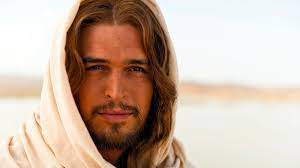
In the world view I was fed as a child:
- Of course Jesus was white (he had long, auburn hair and looked a bit like a 1960's hippie but similar enough to look like some of our neighbours).
- In school, boys went to Industrial Arts class while girls went to Home Economics.
- Of course we should send food to the starving children in Africa because (1) we're charitable, and (2) they need our help.
- And I should do my part in helping people find Jesus. After all how else will they be saved and find eternal life?
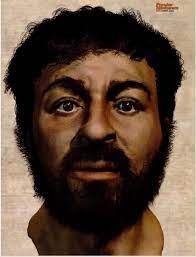
There was nothing in my upbringing to expose me to the realities that:
- Jesus was an Aramaic Jew. This meant that he was probably short with short, curly, black hair and a dark complexion, not the sort of look to easily pass through airport screening today.
- Women have, can, and will accomplish great things. As an example, Canadian women brought home more Olympic medals than Canadian men for quite a few Olympic games already. But I'm just using sports as one area where this is true.
- The role of colonialism (and neo-colonialism)--the International Monetary Fund (IMF) and its "development loans" to dictators, and arbitrarily drawn national borders which did not respect natural tribal and ethnic groupings--all had a huge effect on the global distribution of wealth and explains why some countries and peoples are perpetually poor.
- If God is truly and completely all-loving, then God is by nature not wrathful. There is no need to insist that people "find" Jesus. God's eternal love is not diminished by our inability to search-out or recognize that love.
Other Stories
Perhaps you have a different narrative:
- Maybe you felt you were "different" at an early age. You knew it would not be wise to share your doubts, your longings, your desires and so you buried them deep within you, hoping they would go away and never surface again. You tried to live the life you saw modeled by the adults around you.
- Maybe you grew up in a hostile family. Parents, or the adults in your home didn't get along and took it out on you or your siblings. You internalized that fear, anger, guilt and felt you were worthless and unloved.
- Maybe you grew up a family that wasn't yours. Maybe you were a victim of the "Sixties Scoop" and forced to transform your First Nations/Aboriginal ancestry and skin colour into a white middle-class upbringing.
- Perhaps life was about math, and science, and doing well at school but your interests and passions lay elsewhere.
- Or maybe your sense of worth was tied to you achievements. You knew your parents always loved you, but you felt they would love you more if you never had a grade less than a B+ on your report card.
- Maybe your story is all together different from any of these.
My point is that we can honour and celebrate the good (no matter how much or how little there was of it) but we should still feel free to challenge and revisit the bad so that we are ready for the journey ahead and open to engaging with our fellow travellers. We need to welcome questions and challenges from each other so we can grow ourselves.
The Other Elephants in the Room...
One challenge facing us as we journey towards an inclusive, loving, accepting humanity is the "religious" baggage we have accumulated over the centuries. Many of us have been immersed in this way of thinking throughout our entire lives.
Just like fish never question the water in which they swim and animals never question the air they breathe, humans typically just accept the cultural, religious, ethnic, gender, and racial biases that we have always known. It's hard to question what we've always been taught is true—especially if we're the only one in our circle of family and friends putting up our hand to ask the questions.
For example:
- Judaism has traditionally taught its followers that only the descendents of Abraham are the "chosen" Children of God. Those who cannot trace their ancestry to one of Abraham's descendants—and especially to a descendant of Jacob—one of Abraham's grandsons—are not God's chosen people.
- Christianity has historically used passages like Mark 16 to allege that Jesus claimed exclusivity of Christianity over other religions and even people of no religions:
And [Jesus] said to [his followers], “Go into all the world and proclaim the good news to the whole creation. The one who believes and is baptized will be saved; but the one who does not believe will be condemned.
- Muslim leaders introduced the concept of Tahrif, the assertion that Jews and Christians have altered the original words of God in the Quran and corrupted their meaning:
Most surely there is a party amongst those who distort the Book with their tongue that you may consider it to be a part of the Book, and they say, "It is from Allah," while it is not from Allah, and they tell a lie against Allah whilst they know. (Aal-e-Imran 78)
- Within Buddhism, there are some sects, such as Nichiren Buddhism, that claim that people who do not follow the "Eightfold Path" are destined to suffer through endless cycles of reincarnation, while those who do follow the path will achieve true enlightenment.
This "exclusivism" is a problem as we seek to love and affirm each other—especially those different from us. But it isn't insurmountable. It just requires a critical reflection on how we were taught to understand our own religious scriptures and traditions and to consider other frameworks and interpretations.
This process of discerning or interpreting religious texts is called Hermeneutics. Choosing a different hermeneutic for ourselves can open our eyes and minds to new possibilities—both for our own personal spiritual growth and how we can affirm celebrate our relationships with others. (And now that we've used that word, we'll try not to use it too often).
This journey is an individual one for each of us, but it is aided by understanding how others before us have led the way. If you want to learn more, click the link corresponding to your own spiritual background.
How Accurate is Oral History?
There's a caveat about working with ancient stories.
Some are inclined to dismiss them as legends or fairy tales. Like the party game called "Telephone," we're suspicious that facts and details will be properly transferred and recorded when passed on from one generation to another.
Anthropologists have confirmed that non-literate cultures are often able to very accurately record and retain stories even though they do not have the ability or technology to write these stories down. For example, the Franklin Expedition sailed from England in 1845 to search the Canadian Arctic for a “Northwest Passage” and was never heard from again. Over 20 search missions for the HMS Erebus and the HMS Terror were undertaken starting in 1848 through 1878. While some abandoned artifacts were found, the ships themselves were not recovered. More recent searches were undertaken in 1981, 1984, 1986, 1992, 1994, and 1997-2013 using sonar and side-scanning radar without success.
It wasn't until Parks Canada staff reached out to the indigenous Inuit people in the region and asked if they had any oral traditions about ships loaded with white men being lost or stuck in the ice, that they learned of the ancestral traditions of where these ships actually sank. From the verbal knowledge passed down for more than two centuries, the Government of Canada was quickly able to locate the HMS Erebus the next summer in 2014, and the HMS terror two years later in 2016.
https://parks.canada.ca/lhn-nhs/nu/epaveswrecks/culture/inuit/gardiens-guardians
Still not Sure?
Perhaps you've been taught and believe that there is only one truth. Many religions teach that their scriptures have been accurately dictated by a perfect, divine God so that there can be no errors. Other religions sometimes use the phrase, "literal and inerrant Scripture."
If this is truly what you believe, then our conversation should probably end here. It's not that I don't respect or care about you as a person, but I can't see us finding much of a basis for any agreement. We probably have other things we can do with our time that lock horns over an impasse.
But, let me ask this: Before we go our separate ways, what if I could mathematically prove to you that our/your Scripture—while very possibly and perhaps even probably inspired by divine forces, characters, or deities—is likely not inerrant and infallible?
Would you hear me out before we agree to part in peace?
For this proof, I'm going to use a portion of the Christian scriptures (because it's what I know best), but let me know if you have a different faith, and maybe I can oblige you there too...
In Mark 9.40, we find Jesus saying, "Whoever is not against us is for us." Luke 9.50 has a similar phrase.
But in Matthew 12.30 we find Jesus saying, "Whoever is not with me is against me and whoever does not gather with me scatters." Luke 11.23 has this same phrase. (all verses from the NRSV Updated Edition).
So how can it be that "whoever is not with me is against me" at the same time that "whoever is not against us is for us"?
Let's explore this with a Venn Diagram...
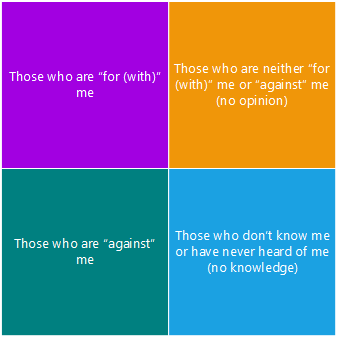
First, there are at least 4 groups of people affected by these verses:
- Those who are "for" or "with" Jesus (we can assume this to include his disciples, followers, and other believers)
- Those who are "against" Jesus (we can assume this to include his enemies and those critical of him and his teachings)
- But there are also those who have no opinion of Jesus (they may have heard of Jesus but aren't either supporting or opposing him and possibly have no strong views of him at all)
- Finally, there are those who have no knowledge of Jesus at all (either because they have never heard of him, or they live in a different country, or they died before Jesus was even born).
Our grouping would look like the diagram at right. How do these groups fit into these two different verses from Mark and Matthew?
Let's superimpose the verse from Mark and Matthew on top of this image. Purple (and purple stripes) will indicate everyone who is included by Jesus, and green (and green stripes) will indicate everyone excluded by Jesus:
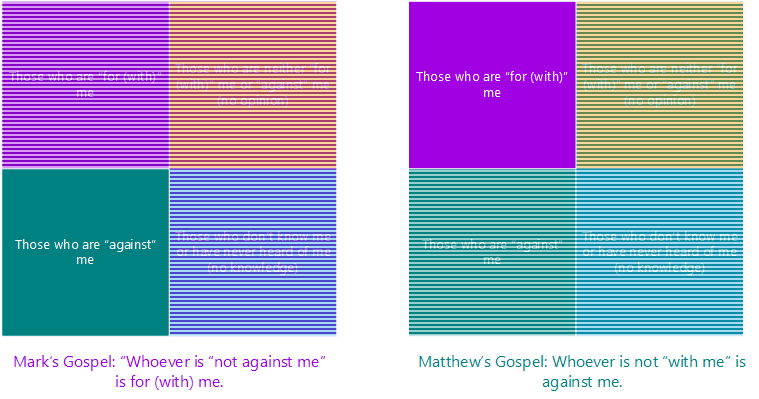
Clearly, these aren't just different ways of saying the same thing. If we choose Mark's Gospel, then Jesus includes everyone, except perhaps those who are openly hostile or rejecting of him. Except for this group of people, Mark sees the Gospel as a "large tent" sort of message that includes everyone else.
If we choose Matthew's gospel, then there are a lot of people who are against Jesus—and probably don't even know it. Only the people who actively, visibly and personally sign-on and are supportive of Jesus are part of the "in group." Everyone else is left sitting on the outside.
There is no other logical way to look at these two passages and then say that the Bible is both literally inspired and inerrant unless we say that God has some good days and God has some bad days. But of course, this would undermine some other claims that we generally make about God.
So:
With an understanding of our human limits, an appreciation of the complexity of our world and our societies, and an eagerness to grow in our self-awareness and concern for one another, I invite you to join us in broadening our truths, finding richness in our reality, and finding nourishment for your own spirit.
To learn more, choose the faith tradition with which you most closely identify: